Compound Interest Calculator
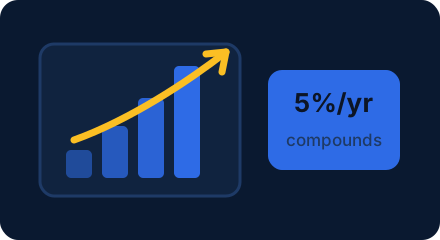
Enter a starting balance, a monthly deposit and a return rate, and see what compounding actually pays — split into what you put in versus what time earned.
How to use this calculator
Run the numbers once, write the result where you will see it, and let the free expense tracker do the weekly work: it sorts every entry into needs, wants and savings automatically, so drift from the plan is visible the moment it starts instead of at the end of the month. A calculator sets the target; tracking is what actually gets you there.
What compounding really means
Compounding is earning returns on your previous returns. The first years look boring on purpose: $10,000 earning 5% grows about $512 in year one — a number nobody gets excited about. But that interest now earns its own interest, and by year ten the same untouched balance is growing roughly $800 a year. The curve is back-loaded: most of the growth lands in the final years, which is exactly why people who stop at year three never see it. The calculator’s three-way split — future value, money you put in, interest earned — makes the back-loading visible instead of theoretical.
The monthly deposit is the quiet hero
Run the default numbers: $10,000 alone at 5% takes about fourteen years to double. Add just $200 a month and the same account crosses $47,000 in ten — the deposits, not the interest, do most of the work in the first decade. That is good news, not a disappointment: early on, your savings rate is a lever you fully control, while the return rate you do not. Compounding rewards the boring combination of an automated deposit and patience far more than it rewards hunting for an extra percentage point of yield.
Years beat percentage points
The gap between 4% and 6% feels important; the gap between ten years and twenty is enormous. At 5%, money roughly doubles every fourteen years, so a balance left for thirty years is not twice your ten-year result — it is four times, and most of that doubling happens while you sleep. This is why retirement math starts at twenty-two, not thirty-two, and why the years input on this calculator deserves more attention than the rate input. Time is the only input you can never add later.
Where the return realistically comes from
Be honest about the rate you enter. Money needed within three years belongs in a high-yield savings account or CD — currently a real 4% or more, federally insured, zero drama. Money needed in ten-plus years historically came from broad index funds averaging around 7% after inflation, with genuine down years along the way. Entering 10% because a friend said so produces a forecast that will quietly betray you; entering a conservative number means the surprise, if any, is pleasant.
Frequently asked questions
Is compound interest the same as APY?
Close — APY is the yearly rate with compounding already baked in, so a 5% APY account compounds to exactly 5% over a year. This calculator applies the annual rate monthly, which matches how savings accounts and most funds actually credit interest.
What about inflation?
Subtract roughly 3% from your return to see today’s-dollars growth: a 5% nominal return is about 2% real. Run the calculator twice — once with the nominal rate, once with the real one — and the second result is your future purchasing power.
Daily or monthly compounding — does it matter?
At bank rates the difference is pennies per year. The calculator compounds monthly, which is the standard for savings accounts and a fair approximation for everything else.